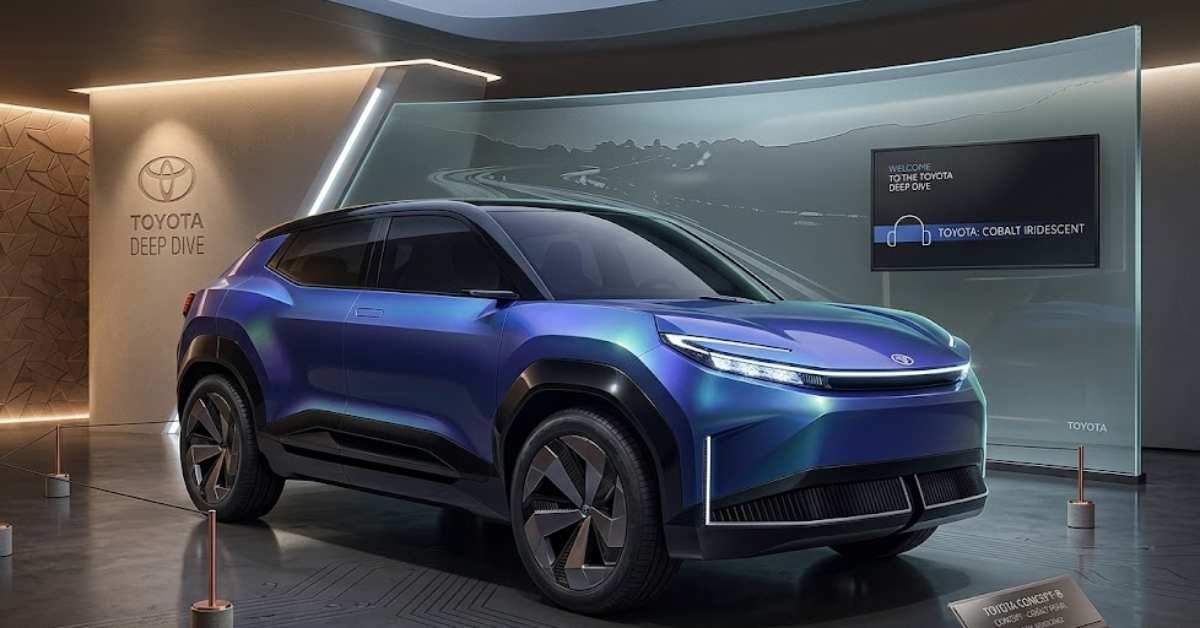
Toyota First EV is now one of those phrases that instantly grabs attention in the Indian auto market. For years, Toyota has been known here for reliability, comfort, strong resale value, and a practical approach to cars. Whether it was family MPVs, rugged SUVs, or hybrid models, the brand has always carried a sense of trust. That is exactly why the excitement around Toyota First EV feels different. This is not just another electric vehicle story. It is about a company with deep roots in India finally stepping into a space that is shaping the future of mobility.
Indian buyers have changed a lot in the last few years. Earlier, most car discussions were about mileage, engine smoothness, and monthly fuel spend. Those things still matter, of course, but now there is another layer to the conversation. People want modern features, cleaner mobility, low running costs, and a driving experience that feels fresh. The electric vehicle market has slowly moved from curiosity to serious interest. In that changing atmosphere, Toyota First EV naturally becomes a headline-maker.
| Feature | Expected Highlights |
|---|---|
| Brand Positioning | Toyota’s major electric step for India |
| Body Style | Stylish and practical SUV-like design |
| Focus Area | Strong range, modern tech, family appeal |
| Buyer Interest | Urban users, families, young professionals |
| Core Strength | Trusted brand image with new-age EV thinking |
| Market Impact | Could strengthen Toyota in the Indian EV race |
Why Toyota First EV Matters So Much
The entry of Toyota into India’s electric space matters because the company has never been a brand that chases noise without purpose. Toyota generally moves when it believes a segment is ready for serious long-term growth. That is why many buyers are seeing Toyota First EV as a sign that battery-powered vehicles are no longer just a side trend. They are becoming a mainstream choice.
This matters even more in India because many customers are still cautious about going electric. They are interested, but they want reassurance. They want to know whether charging will fit into daily life. They want confidence about battery durability. They want service support. They want a vehicle that does not feel experimental. A Toyota-badged EV automatically answers some of those emotional concerns because the brand already carries an image of dependability.
There is also the emotional side of the story. Toyota has a loyal fan base in India. There are buyers who have owned Innova models, Fortuners, Glanzas, or Hyryders and have built confidence in the company over time. For these buyers, Toyota First EV feels like a natural next step. It gives them a way to move toward the future without leaving behind the sense of trust they already have.
Stylish Looks Could Be a Big Attraction
When people imagine an electric vehicle, they often think about battery range first. But in real showrooms, looks matter just as much. A car may have strong specifications on paper, but if it fails to create that first visual spark, the excitement drops. Toyota First EV seems likely to understand this very well.
Indian buyers increasingly want their vehicles to have strong road presence. They do not want a boring machine that disappears in traffic. They want something that feels premium, sharp, and modern. That is especially true in the electric segment, where many buyers expect the car to look futuristic as well. Toyota First EV could benefit from this trend if it carries a bold SUV-like stance, sharp front-end styling, connected lighting elements, and a clean but modern body shape.
A stylish design does more than just improve showroom appeal. It helps create identity. Buyers want a car that feels different from the usual petrol or diesel options. At the same time, they do not want something overly strange. This is where Toyota may strike the right balance. The brand has a history of keeping designs practical and broad-based rather than too extreme. So the first EV could arrive with just enough drama to feel new, while still looking mature enough for family buyers.
This balance is important because the car will likely attract more than one kind of customer. Younger buyers may like the sharp styling and tech-led identity. Family buyers may appreciate the SUV form and premium stance. People upgrading from a hatchback or compact SUV may see it as a more aspirational step. Good design can bring all these groups together.
New Tech Is Expected to Be a Key Selling Point
The moment people hear about Toyota First EV, they assume one thing immediately: it should feel modern from the inside. That expectation is natural because EVs are no longer judged only by how they move. They are also judged by how smart they feel.
The cabin experience is now a huge part of the buying decision. Customers want a dashboard that looks fresh. They want a digital driver display, a large touchscreen, phone connectivity, connected features, charging-related information, and a generally cleaner tech experience. But there is one important condition. The tech should not feel confusing. Indian customers like smart features, but they still want usability. Toyota has traditionally done well in making cars feel easy to understand, and that could become a big strength here.
Toyota First EV may attract attention if it offers a cabin that feels premium without becoming intimidating. A dual-tone interior, quality materials, soft-touch surfaces, a stylish steering wheel, clever storage spaces, wireless charging, and a clean screen layout can all add to that premium impression. In an EV, these small details matter more because buyers already come in expecting a next-generation experience.
Then there is the convenience side of new tech. Features like parking cameras, drive modes, regenerative braking options, connected car functions, navigation support, charging updates, and phone-based monitoring are becoming increasingly relevant. Buyers now want their car to feel like part of their digital lifestyle. If Toyota First EV gets that balance right, it could become appealing even to those buyers who were earlier looking at other modern EV brands.
Strong Range Will Shape Public Opinion
No matter how stylish the car looks or how modern the cabin feels, range remains the biggest talking point in the EV market. In India, range is not just a number. It is a confidence factor. It decides how relaxed or stressed a buyer feels about ownership.
Most people do not use a car only for one kind of driving. A vehicle may be used for office commuting during the week, family shopping in the evening, school pickup runs, and then a weekend drive out of town. That is why range anxiety still influences purchase decisions. People want a strong enough range so they do not have to keep thinking about charging again and again.
Toyota First EV is being talked about as a product that may offer strong range, and that alone is enough to put it on many buyer shortlists. The phrase “strong range” sounds simple, but in India it carries huge emotional value. It means freedom. It means flexibility. It means less planning. It means more trust.
A good range figure also helps first-time EV buyers make peace with the transition from petrol or diesel. When the claimed range sounds healthy, buyers begin to imagine the car fitting into daily life more naturally. That is exactly why Toyota First EV could become a major talking point if it combines efficient battery use with real-world practicality.
Toyota’s Brand Trust Could Make the Difference
There are many companies now trying to make noise in the electric segment. Some offer eye-catching designs, some focus heavily on screens and software, and some attract buyers with aggressive pricing. But in the end, trust still matters enormously, especially in India.
Toyota starts this journey with a strong advantage. The brand already carries a clean and dependable image. That reputation has been built over years, not months. Buyers have seen Toyota vehicles perform well over long ownership periods. They have seen the company maintain consistency. They have seen that Toyota generally focuses on peace of mind rather than only flashy marketing.
This is where Toyota First EV could gain a real edge. Many potential EV buyers are not just comparing features. They are also asking themselves a deeper question: which company will stand by me over the long term? A Toyota product naturally feels reassuring in that context.
Service network also matters here. Electric cars still generate many practical questions. Buyers want to know about maintenance, battery health checks, software updates, and after-sales handling. A strong service reputation reduces anxiety. And that is something Toyota can use as a powerful selling point without even needing dramatic slogans.
The Family Buyer Angle Looks Strong
One of the biggest reasons Toyota First EV could succeed in India is that it may appeal to family buyers, not just individual enthusiasts. This is a huge point because family acceptance still shapes car buying in the country.
A car in India is rarely a one-person purchase. It is discussed by parents, siblings, spouse, and sometimes even relatives. Someone wants comfort. Someone wants lower running cost. Someone worries about boot space. Someone asks whether charging is practical. Someone wants style. A good product is one that can answer all those voices reasonably well.
Toyota’s first EV could fit that role if it offers a comfortable cabin, easy entry and exit, good rear seat space, useful boot room, and a design that looks premium without being impractical. If the driving experience is smooth and quiet, that will help even more. EVs already have an advantage in that sense because the silent and instant nature of electric power feels refined in city traffic.
For many urban families, the idea of a Toyota electric SUV could sound ideal. It offers the trust of a familiar brand while also promising a lower-cost daily drive. That combination may turn out to be very powerful.
A Big Shift in Toyota’s India Story
Toyota has long been associated in India with durability and mature decision-making. The company’s electrification story here has mostly been discussed around hybrids. That already gave buyers a sense that Toyota was serious about cleaner mobility. But Toyota First EV represents something more symbolic. It is a signal that the company is willing to take a direct step into battery electric mobility in the Indian market.
That matters because once a brand launches its first EV, people immediately start looking beyond the first model. They start asking what comes next. Will there be more electric SUVs? Will there be smaller EVs? Will the technology improve further? Will there be stronger charging partnerships? Will the pricing become more aggressive over time?
So Toyota First EV is not just about one vehicle. It is also about opening the door to a bigger future strategy in India. Buyers understand that, and that is part of the reason this first entry feels so important.
Competition Will Be Tough, But Toyota Has Its Own Strength
The electric car market in India is becoming more competitive by the month. Buyers now have options across different budgets and body styles. Every new model is judged heavily on design, range, charging, features, price, and ownership experience. So Toyota First EV will not get an easy ride just because of the badge.
But Toyota does not need to win every category to make a strong impression. Its biggest strength lies in balance. If the company manages to deliver a package that feels premium, practical, efficient, comfortable, and trustworthy, many buyers will find that more appealing than a car that only wins on headline numbers.
This is often how Toyota succeeds. The brand does not always aim to be the loudest voice in the room. Instead, it tends to focus on real-world usability and lasting ownership value. That approach may work especially well in the EV segment, where buyers are still seeking stability along with excitement.
The EV Driving Experience Could Win Hearts
Another reason Toyota First EV could make an impact is the basic nature of electric driving itself. People who try a good EV for the first time are often surprised by how smooth and calm it feels. There is no engine noise in the usual sense. Acceleration feels immediate. City traffic becomes less tiring. The overall experience can feel more premium even in everyday use.
If Toyota tunes its first EV properly for Indian conditions, it could deliver exactly the kind of relaxed yet responsive drive that many customers want. City users may enjoy the silent movement and easy overtakes. Families may appreciate the calm cabin environment. New-age buyers may love the modern feel of instant torque and refined response.
For Toyota, this could become a major emotional win. The brand has always been associated with smoothness and reliability. An electric platform naturally strengthens those qualities in a different way.
Pricing Will Be Crucial
No matter how strong the product is, pricing will remain one of the most important factors. Indian buyers are value-conscious, and that will not change. In the EV market, people are willing to pay a premium only if they clearly understand what they are getting in return.
Toyota First EV will therefore need a price strategy that feels sensible. Buyers will compare it not just with other EVs, but also with strong petrol, hybrid, and diesel alternatives in the same broad range. If Toyota can position the vehicle as a premium but practical choice, it may find a sweet spot.
The challenge will be to make the first EV feel aspirational without pushing it too far from mainstream reach. If the balance is right, Toyota could attract not only brand loyalists but also many first-time Toyota customers.
Final Thoughts
Toyota First EV has all the ingredients to become a major discussion point in India’s changing car market. It carries the weight of a trusted brand, the freshness of an electric future, and the possibility of delivering exactly what many Indian buyers are now searching for. Stylish looks matter because modern buyers want road presence. New tech matters because today’s car is expected to feel connected and premium. Strong range matters because confidence is everything in EV ownership.
That is why Toyota First EV feels important even before the full ownership story unfolds. It represents a shift. It tells buyers that Toyota is ready to participate more directly in the next phase of mobility in India. It gives loyal customers a new direction. It gives cautious EV buyers a familiar brand to consider. And it gives the market a fresh reminder that the electric race in India is only getting more interesting.
In the end, the biggest strength of Toyota First EV may not be just one feature. It may be the overall feeling it creates. A feeling that the future can be exciting without being risky. A feeling that modern mobility can still come with long-term trust. And in a market like India, that kind of feeling can be very powerful.
FAQs
What does Toyota First EV mean?
Toyota First EV refers to Toyota’s first major battery-electric offering for the Indian market, seen as an important step in the company’s EV journey.
Why is Toyota First EV getting so much attention?
It is getting attention because Toyota is a trusted brand in India, and buyers expect its electric vehicle to combine reliability with modern styling, technology, and practical range.
Will Toyota First EV be good for family use?
It could be a strong family option if it offers comfortable seating, practical space, smooth driving, and low running costs.
Why is range so important for Toyota First EV?
Range matters because it gives buyers confidence. In India, many EV customers still want reassurance that the car can handle daily use without frequent charging stress.
Can Toyota First EV attract first-time EV buyers?
Yes, it has strong potential because many first-time EV buyers prefer a trusted brand that feels safe and dependable.
What could be the biggest strength of Toyota First EV?
Its biggest strength could be the combination of Toyota’s brand trust with stylish looks, new tech, and strong range.