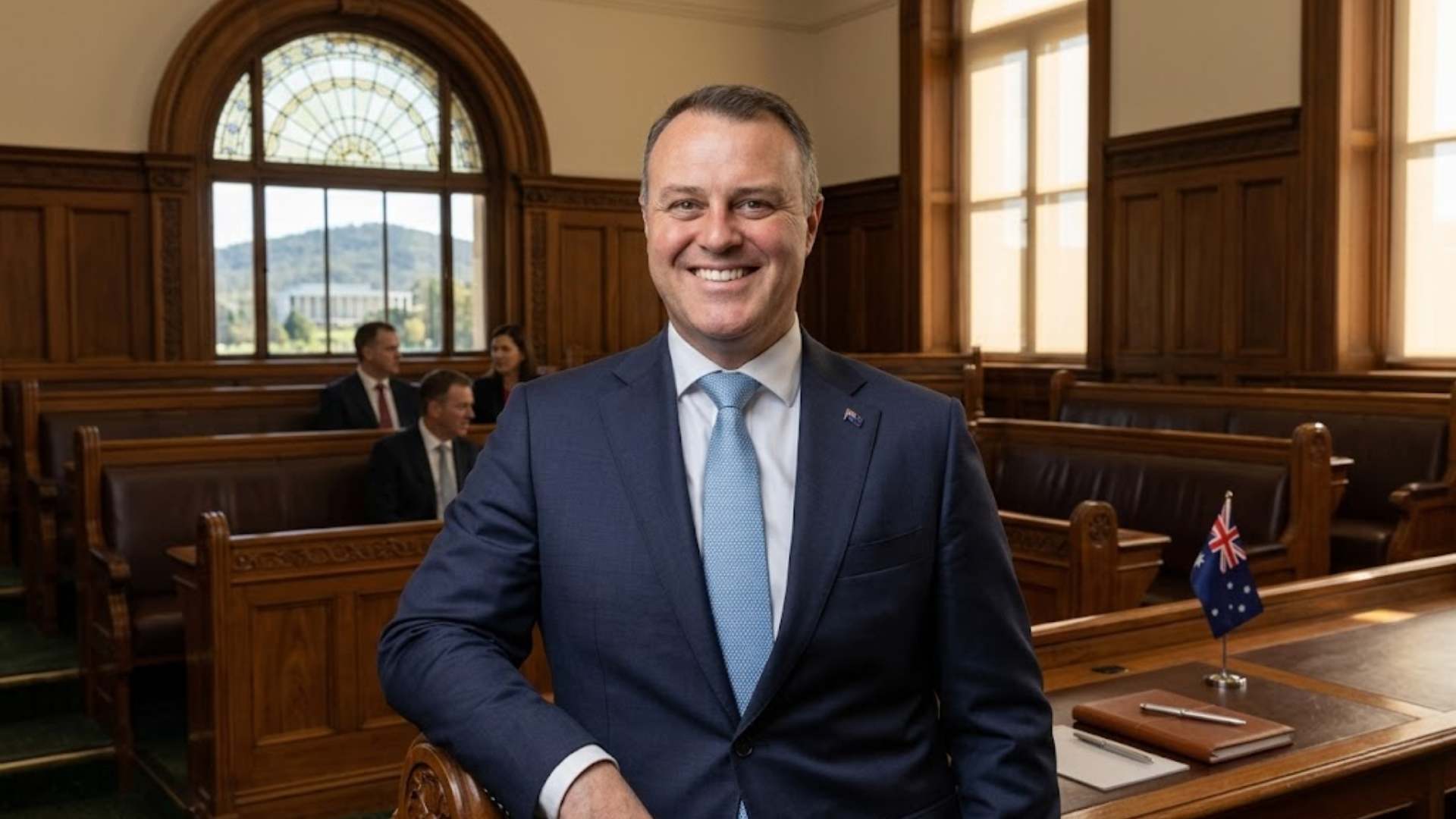
Tim Wilson is once again drawing attention at a time when economic pressure is shaping political conversation in a very real and personal way. Across Australia, people are not talking about the economy as an abstract issue. They are talking about grocery bills, fuel prices, mortgage stress, business costs, and the simple question of whether everyday life is becoming harder to manage. In that kind of atmosphere, a politician who speaks directly on economic pain can quickly move back into the spotlight. That is exactly what is happening with Tim Wilson.
The reason this moment feels important is because Tim Wilson is not returning through a soft or symbolic role. He is returning through a conversation that touches household budgets and national mood at the same time. When the public starts feeling tired of rising costs and uncertain about what comes next, the voices who frame those frustrations most sharply tend to rise. Wilson has stepped into that space with clear language, political confidence, and a focus on the issues that ordinary voters feel most strongly.
| Detail | Information |
|---|---|
| Main Keyword | Tim Wilson |
| Topic | Tim Wilson’s growing role in Australia’s economic debate |
| Political Focus | Inflation, cost of living, fuel pressure, confidence, and small business stress |
| Public Image | Sharp, direct, and increasingly visible in opposition politics |
| Tone | Political, practical, and focused on household pressure |
There is also something bigger happening beneath the headlines. The Liberal side of politics needs strong economic voices if it wants to turn public frustration into political momentum. Cost of living has become one of the most sensitive topics in the country, and that gives figures like Tim Wilson a real opening. He is speaking in a way that tries to connect inflation, confidence, energy pressure, and small business struggle into one broader story about economic management and political accountability.
That is why this renewed attention matters. This is not just about one politician making pointed comments. It is about a figure trying to shape the national debate at a time when economic anxiety is already high. The spotlight on Tim Wilson feels real because the issues he is talking about feel real to people as well.
Who Tim Wilson Is in the Current Political Moment
For many Australians, Tim Wilson is already a familiar name. He is not a newcomer trying to force his way into the discussion. He has a political identity, a recognisable style, and a reputation for speaking in a direct and often combative way. That matters because in modern politics, visibility is not only about title. It is also about tone. Wilson tends to speak with force rather than caution, and that style helps him stand out in debates about money, policy, and public pressure.
Right now, the reason Tim Wilson matters more is because economic debate has moved to the centre of political life. When inflation remains uncomfortable, when confidence feels weak, and when businesses complain that costs are squeezing them from all sides, the politicians who talk most aggressively about those concerns naturally get more attention. Wilson has clearly understood that mood and leaned into it.
His public positioning is built around a simple but powerful idea. He is trying to tell voters that the pressure they are feeling is not random and should not be accepted as normal. He is framing economic discomfort as a political failure, not just a difficult season. That kind of message often resonates because it gives people a target for their frustration. Instead of feeling trapped by a vague economic atmosphere, they are invited to see their stress as the result of decisions made by those in power.
This is why Tim Wilson has started to feel more relevant again. He is not merely commenting from the sidelines. He is trying to define how voters understand the economy itself. That is a much bigger role than simply offering criticism.
Why Tim Wilson Has Returned to the Spotlight
There are moments in politics when a figure becomes highly visible because of scandal, personal drama, or party conflict. But the return of Tim Wilson feels different. His visibility is coming from economics, and that gives it a certain weight. People do not just watch economic arguments out of curiosity. They watch because those arguments touch their lives directly.
When household budgets tighten, the political conversation changes. Voters become less patient with abstract speeches and more interested in practical blame, practical solutions, and practical language. That is where Tim Wilson has found his opening. His recent tone has suggested that economic stress is not being handled properly and that ordinary Australians are paying the price. This kind of message lands especially strongly when families are already feeling stretched.
His return to attention also says something about the opposition strategy more broadly. For the Liberal camp, the economy remains one of the most important battlegrounds. If they can convince voters that the current pressure is the result of weak economic management, they can build a stronger case for themselves. In that effort, Tim Wilson becomes useful not just as an individual politician, but as a public carrier of the larger Liberal argument.
This is one reason his voice is being noticed again. He is speaking in a political moment where inflation, business confidence, and cost-of-living stress have all become emotionally loaded topics. A politician who can turn those anxieties into sharp political language will almost always find a bigger audience.
Inflation Has Become Central to His Image
If one issue defines the current public image of Tim Wilson, it is inflation. He is not treating inflation like a dry economic number discussed only by experts and commentators. He is treating it as a lived experience. That is an important difference. People do not wake up thinking about inflation as a chart. They think about it when they pay more for food, fuel, utilities, and other basic needs. By framing the issue in that emotional and practical way, Wilson makes the subject feel immediate.
This strategy works politically because inflation is one of those rare issues that affects almost everyone in some form. A large business may worry about input costs. A small business may worry about survival. A homeowner may worry about repayments. A family may worry about everyday essentials. The same issue touches different lives in different ways, and that gives it huge political energy. Tim Wilson has clearly chosen to make that energy central to his messaging.
There is also something more strategic in the way he talks about inflation. He does not present it only as a global problem that every country is struggling with. He tries to suggest that local decisions matter and that poor management makes the pain worse. That distinction is politically valuable because it turns inflation from an unfortunate global trend into a domestic accountability issue. Once that happens, the debate becomes much more personal and much more political.
For Tim Wilson, this matters because it allows him to become a translator of public frustration. He takes a broad economic problem and gives it a sharper political meaning. That is often how opposition figures build momentum.
The Cost of Living Is Giving His Message Power
One of the biggest reasons Tim Wilson is gaining attention is because cost of living is not just a talking point. It is a feeling people carry every day. It is there when they open bills, plan a weekly budget, or think twice before spending on things they once considered normal. That everyday strain gives politicians a powerful opening, especially if they can speak in a way that sounds urgent rather than distant.
Wilson has positioned himself inside that feeling. He is not trying to sound like a detached policy lecturer. He is speaking more like someone trying to capture public irritation and turn it into political force. That is why his message can travel beyond strictly political audiences. Even people who are not deeply engaged in parliament or party battles can understand the language of economic pressure.
The cost-of-living angle also gives Tim Wilson emotional relevance. Politics often becomes more influential when it speaks to people’s stress, not just their ideology. A voter may not follow every policy detail, but they know when daily life feels more expensive. They know when confidence is weak. They know when running a business feels harder. Wilson’s messaging is designed to sit inside that awareness.
This makes his rise in attention feel more than temporary. As long as cost of living remains a major public concern, politicians who speak aggressively about it will continue to find space in the national conversation. That is part of why Tim Wilson has returned so visibly.
Why His Style Stands Out
Politics is not only about what is said. It is also about how it is said. Tim Wilson has a style that tends to cut through because it is direct, sharp, and sometimes confrontational. He does not usually sound hesitant. He sounds like he is trying to land a punch. In a media environment crowded with careful language and repeated talking points, that can make a difference.
This style can help him in two ways. First, it attracts attention. Second, it makes his message easier to remember. A politician who speaks in blunt terms often gets repeated more widely than one who speaks in balanced technical language. That is especially true on economic issues, where public patience for complexity can be limited. People often respond more quickly to language that feels emotionally clear.
Of course, this style also comes with risk. Sharp rhetoric can energize supporters, but it can also alienate people who want more measured discussion. Still, for Tim Wilson, the benefits appear obvious right now. He is trying to become one of the leading voices of economic opposition, and that usually requires force, not softness.
His tone also fits the moment. Public frustration is high, and political language often becomes sharper when the public mood becomes more strained. Wilson’s way of speaking reflects that atmosphere. Whether one agrees with him or not, he sounds like someone who wants to turn economic unease into political pressure.
Small Business Stress and Why It Matters Politically
Another reason Tim Wilson is finding a stronger platform is his focus on small business pressure. This is a politically smart area because small businesses often sit at the intersection of economic policy and daily life. They are not distant corporations operating in another world. They are local employers, family ventures, service providers, shop owners, and community anchors. When they struggle, the public notices.
Talking about small business allows Tim Wilson to widen his economic argument. Instead of focusing only on households, he can connect family pressure with business pressure. That creates a broader picture of stress across the economy. The story becomes not just that people are finding life expensive, but that the entire local economic environment feels squeezed.
This matters because voters often see small business as a measure of national health. When local businesses appear confident, communities feel more stable. When small businesses seem anxious, politics begins to feel more urgent. Wilson’s attention to this area helps him sound connected not only to opposition politics, but to real commercial life as well.
The focus on business pain also strengthens his broader message about management and confidence. It suggests that economic pressure is not limited to private household budgets. It is affecting the productive side of the economy too. That gives Tim Wilson a more complete and more politically useful narrative.
Fuel Pressure and Public Emotion
Fuel is one of the most emotionally sensitive issues in economic politics because people see it constantly. Even those who do not follow macroeconomic debate can immediately feel the impact of fuel price pressure. It affects commuting, business transport, delivery costs, and overall financial mood. That is why politicians often pay close attention to it.
For Tim Wilson, fuel pressure is useful politically because it makes economic argument visible. Inflation can feel like a big concept. Fuel prices feel personal. They are seen at service stations, discussed in households, and noticed in business costs. By connecting his broader economic criticism to energy pressure, he gives voters something concrete to hold onto.
This helps his message travel. A politician who talks only in general terms about inflation may be heard but not felt. A politician who links inflation to fuel and everyday strain is more likely to connect. That is one reason Wilson’s recent economic pressure messaging feels sharper than a standard opposition critique.
The emotional side of fuel pressure also matters. When prices rise in visible ways, people often feel that control is slipping. That feeling of losing control can easily become political frustration. Tim Wilson is clearly trying to capture that emotional energy and direct it toward a larger argument about economic leadership.
The Liberal Strategy Behind His Rise
The renewed visibility of Tim Wilson is not just about personal skill. It also reflects a broader Liberal political strategy. Opposition parties need issues that cut through, and the economy remains one of the strongest possible battlegrounds. If the Liberals want to increase pressure on the government, they need voices who can make economic discomfort sound immediate, serious, and politically consequential.
Wilson fits that role well. He has the tone, the profile, and the willingness to make economic debate feel like a fight rather than a seminar. That makes him valuable within a party trying to sharpen its edge on cost of living and confidence.
There is also a symbolic side to this. When a figure like Tim Wilson rises in visibility, it signals what the party wants voters to notice. It signals that the economy is where they believe the government is most vulnerable. It signals that household pressure and business anxiety are not side issues, but central campaign terrain.
This is why his return to attention feels coordinated with a bigger political mood. It is not random. It reflects a wider effort to keep economic dissatisfaction at the centre of national discussion.
Why Voters May Be Listening More Closely Now
There are times when political attacks bounce off the public because people are not in the mood to absorb them. But there are other times when voters are already feeling enough pressure that the message arrives more easily. This appears to be one of those moments. The reason Tim Wilson is being noticed more now may be as simple as this: people are more ready to hear an economic attack when their own finances feel under pressure.
That does not mean every voter will agree with him. But it does mean his words have a better chance of landing. Economic frustration creates a more receptive audience for opposition arguments, especially when those arguments are framed around everyday experience rather than abstract ideology.
Voters also tend to listen more closely when a politician appears to be speaking directly to what they feel. That is where Wilson has strength right now. His messaging is not trying to sound distant or theoretical. It is trying to sound grounded in household stress, confidence problems, and local business pain.
This may be the biggest reason Tim Wilson is back in the spotlight. Politics becomes powerful when it connects to existing emotion. Right now, the emotional ground is already prepared by economic anxiety.
The Challenges Ahead for Tim Wilson
Even though Tim Wilson is gaining attention, the path ahead is not simple. Opposition politicians can win headlines by pointing out problems, but eventually they must also persuade voters that they represent something better. It is one thing to say the current economic situation feels painful. It is another to convince the public that your side would manage it more effectively.
That means Wilson’s challenge is not only to remain visible, but to remain credible. Strong rhetoric can create momentum, but credibility sustains it. If he wants to become a truly major economic voice, he will need to balance political attack with enough substance to keep public trust.
There is also the challenge of tone. Direct language can energize attention, but too much aggression can make a politician seem more interested in conflict than solutions. Tim Wilson will need to keep walking that line carefully. He needs to sound urgent without sounding merely theatrical.
Still, the opportunity is clear. As long as the economy remains central to political debate, there is room for a figure like Wilson to expand his influence. The question is whether he can turn this moment of visibility into something more lasting.
Final Thoughts
Tim Wilson is back in focus because he has stepped into one of the most emotionally powerful areas of public life: the economy people actually feel. He is speaking into a moment shaped by inflation worries, cost-of-living pressure, fuel anxiety, weak confidence, and concern from small businesses. In politics, that is a powerful combination.
What makes his return notable is not simply his title or his party role. It is the way he is trying to frame the entire national mood. He is presenting economic pressure as a sign of failed management, not just unfortunate conditions. He is taking public frustration and turning it into a sharper political story. That is why he is being noticed again.
Whether this renewed spotlight becomes a major turning point for Tim Wilson will depend on what happens next. He has clearly found an issue space where voters are highly alert. He has a tone that stands out. He has a role that gives him national relevance. Now the challenge is whether he can convert attention into long-term authority.
For now, one thing is clear. Tim Wilson has returned to the conversation at a moment when economic debate feels personal, political, and impossible to ignore. That is exactly the kind of environment where a figure like him can grow louder, sharper, and more influential.
FAQs
Why is Tim Wilson back in the spotlight
Tim Wilson is back in focus because economic pressure, inflation, and cost-of-living concerns have become central political issues, and he is speaking strongly on those themes.
What kind of issues is Tim Wilson focusing on
He is focusing on inflation, household pressure, confidence, fuel costs, and stress facing small businesses.
Why does cost of living help his political message
Cost of living affects people directly in their daily lives, so politicians who speak clearly about it often receive more attention and public response.
Is Tim Wilson’s political style important to his visibility
Yes, his direct and sharp speaking style helps him stand out, especially in crowded economic debates.
Why are small businesses part of his message
Small businesses are often seen as a sign of wider economic health, so talking about their stress helps broaden his argument beyond household budgets.
What challenge does Tim Wilson face now
His biggest challenge is turning strong attention and sharp criticism into lasting credibility and public trust.