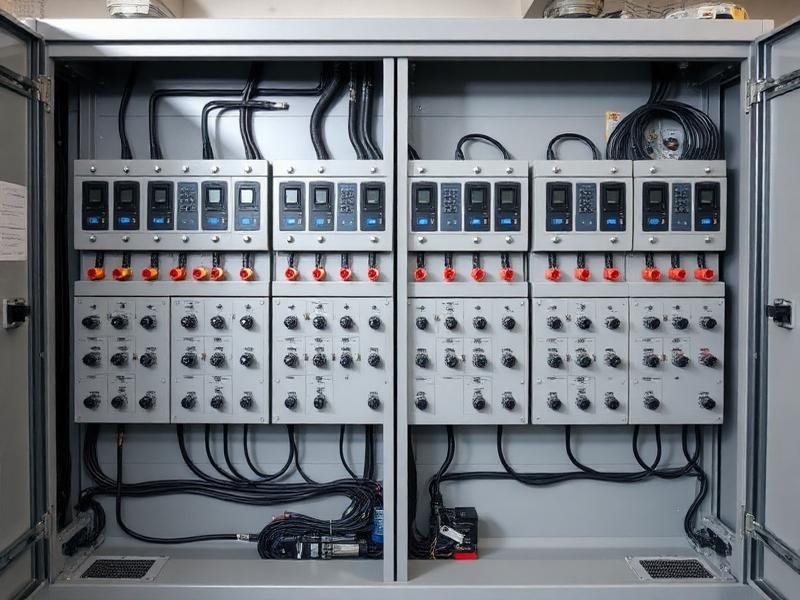
In modern industrial operations, decisions about electronic enclosures shape both daily performance and long-term resilience. This article takes a practical, specification guide view of electronic enclosures, drawn from years of working with industrial buyers across India.
Understanding electronic enclosures in Today's Industrial Landscape
The Indian industrial sector has matured rapidly over the last decade. Buyers expect reliable lead times, certified materials, traceable processes and post-sale accountability. Against that backdrop, electronic enclosures sits at the centre of operational performance.
What used to be a back-office concern is now a board-room priority. Disruptions during the pandemic taught every operations leader that a single weak link in the chain can shut down an entire production schedule.
For small and mid-size manufacturers in particular, getting electronic enclosures right unlocks an outsized advantage. The good news is that the principles below apply equally to a five-person workshop and a multi-plant enterprise.
Key Factors That Drive Success
There is no single silver bullet. Successful operators consistently get a handful of fundamentals right. Each factor compounds — small improvements across several dimensions produce dramatic gains in throughput, quality and customer satisfaction.
Specification Discipline
Vague specifications are the most common cause of disputes, rework and rejected shipments. Document tolerances, finishes, materials and acceptance criteria in unambiguous language.
When in doubt, attach reference drawings, samples or photographs. The few extra hours invested upfront save days of rework downstream.
Capacity and Lead-Time Realism
Asking the right questions about capacity is often more useful than asking about price. A supplier quoting an aggressive lead time without a clear plan for raw material, labour and QC is signalling future delays.
Quality Systems and Traceability
Modern industrial buyers expect material certificates, batch traceability and documented inspection results. These are the foundation of warranty claims, regulatory audits and continuous improvement.
Common Mistakes to Avoid
Even experienced teams make recurring mistakes. The first is over-indexing on unit price while ignoring total landed cost. A part that is cheaper by ten percent but arrives two weeks late or with a five-percent reject rate is a more expensive part.
The second mistake is single-sourcing critical inputs without a documented contingency. Even outstanding suppliers face fires, power outages and labour disruptions.
Third, many teams underinvest in supplier development. Treating suppliers as adversaries to be squeezed produces short-term wins and long-term scars.
Building a Practical Framework
A workable framework has three pillars: clear specifications, qualified suppliers and a measurement system. Specifications define what 'good' looks like. Qualified suppliers prove they can produce 'good' repeatedly. Measurement closes the loop.
Begin with a written scorecard. Score every active supplier on quality, delivery, responsiveness and commercial terms. Review the scorecard quarterly with each strategic supplier — transparency drives behaviour.
Layer on a risk register. List your top-twenty inputs and identify the single point of failure for each. This single document has saved more production schedules than any other tool we have seen.
How HMG Enterprises Helps
At HMG Enterprises we work as a long-term extension of our customers' procurement and engineering teams. Our model is built around three commitments: speak honestly about lead times, never compromise on documented quality and respond quickly when something goes wrong.
If you are reviewing electronic enclosures for your business, our team is happy to share templates and reference designs. Reach out via the contact form or WhatsApp button on this page and we will respond within one business day.
Conclusion
Electronic enclosures is a discipline. The operations that thrive treat it as such — with clear specifications, qualified partners and documented contingencies.
Start small. Pick one input category, write a clean specification, qualify two suppliers and measure for a quarter. The discipline that emerges from that experiment will reshape every subsequent sourcing decision.
Quick Reference: electronic enclosures Evaluation Criteria
| Criterion | What to Look For | Why It Matters |
|---|---|---|
| Quality Systems | ISO documentation, batch traceability, material certificates | Protects against warranty claims and regulatory risk |
| Capacity | Stated monthly throughput, peak buffer, equipment list | Avoids surprise delays during demand spikes |
| Lead Time | Honest standard lead time, expedite policy in writing | Enables reliable production planning |
| Pricing Transparency | Itemised quotes, clear extras and revisions policy | Prevents disputes and surprise invoices |
| Support | Named point of contact, response SLA, after-sales policy | Reduces downtime when issues arise |
| Logistics | Packaging standards, on-time delivery, dispatch tracking | Protects in-transit quality and schedule |
Frequently Asked Questions
What is the most important factor in electronic enclosures?
Consistency. A supplier or process that delivers acceptable results every time is more valuable than one that occasionally delivers exceptional results.
How long does it take to see results?
Most teams see measurable improvement in twelve weeks once they implement clear specifications, a supplier scorecard and a quarterly review cadence.
Should I work with multiple suppliers or consolidate?
For strategic inputs qualify at least two suppliers — one primary, one backup. For non-critical consumables, consolidating tends to produce better commercial terms.
How does HMG Enterprises approach electronic enclosures?
We treat it as a partnership discipline — transparent lead times, documented QC at every stage and a single named point of contact who owns your account end-to-end.