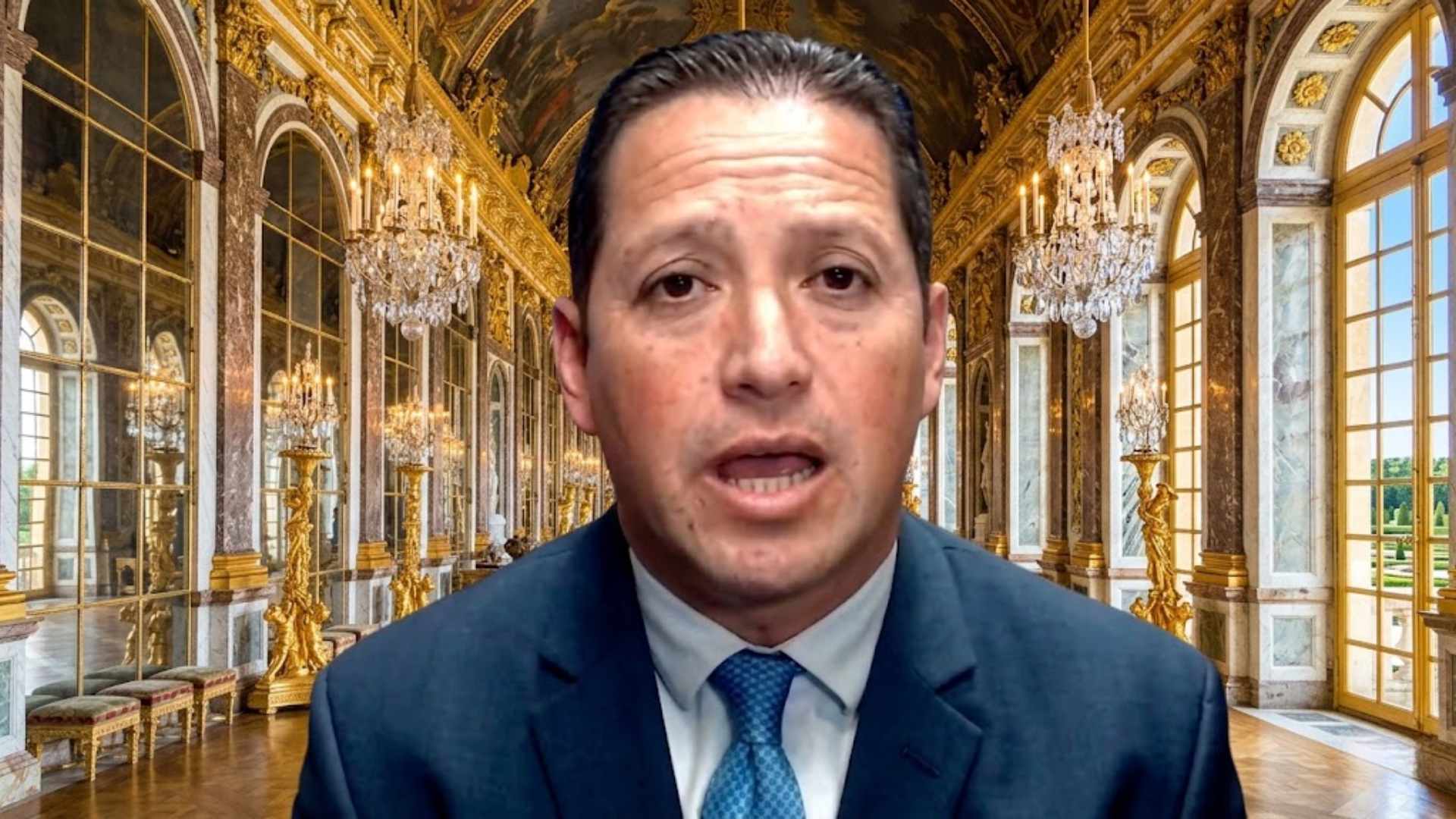
The name Tony Gonzales has suddenly become one of the most talked-about names in American politics, and not for the reasons any sitting lawmaker would want. What started as a deeply damaging personal and political controversy has now turned into a full-blown storm after his decision to leave Congress. Instead of closing the chapter, the exit has only intensified public anger, media scrutiny, and questions about what really happened behind the scenes. In moments like this, politics stops feeling distant and procedural. It starts feeling raw, human, and messy.
The reason the story around Tony Gonzales has grown so quickly is because it now carries several layers at once. There is the ethics cloud, the political pressure, the party embarrassment, and the larger question of accountability in public office. On top of that, there is the emotional weight of a scandal that many people do not see as just another Washington controversy. They see it as a case that touches power, trust, responsibility, and the moral credibility of elected office itself.
| Detail | Information |
|---|---|
| Main Keyword | Tony Gonzales |
| Topic | Tony Gonzales facing backlash after his Congress exit decision and widening ethics controversy |
| Core Focus | Retirement, ethics pressure, political fallout, party embarrassment, and public trust |
| Public Mood | Shocked, divided, and highly critical |
| Bigger Impact | Texas politics, House accountability, and pressure on Republican leadership |
That is why the fallout has not stayed contained. The conversation has moved far beyond one district, one politician, or one set of headlines. The moment Tony Gonzales chose the path of leaving Congress, many people stopped asking whether the scandal would define his future and started asking whether the scandal had already defined his legacy. In politics, the timing of an exit matters. A graceful retirement tells one story. A departure under pressure tells another. And that distinction is exactly what is making this situation feel so intense.
For many observers, the political storm around Tony Gonzales now represents something bigger than one career falling apart. It reflects the way public trust breaks down when ethics questions grow too serious to ignore. It reflects how quickly party support can weaken once scandal becomes a national liability. And it reflects the harsh truth that in public life, reputations often collapse not in one dramatic second, but in a slow chain of events that suddenly becomes impossible to stop.
How the Tony Gonzales Story Reached This Point
The crisis around Tony Gonzales did not erupt from nowhere. It built over time, and each stage made the political damage worse. At first, the story looked like one more troubling controversy in a political system already used to scandal. But over time, it became something much heavier. What may once have looked survivable began to feel politically toxic, especially as official scrutiny increased and the emotional dimensions of the case became harder to separate from the political ones.
That gradual escalation is important because it shows why the pressure around Tony Gonzales became so intense. Public scandals often follow a pattern. First comes denial or limited acknowledgment. Then comes scrutiny. Then comes pressure from the media, opponents, and eventually one’s own side. Finally comes the moment when a politician can no longer convince people that the storm will pass on its own. That pattern seems to have played out here in a way that left very little room for recovery.
The case became far more serious when ethics questions moved into the foreground. Once the issue is no longer only about public image but about official standards, the political stakes rise sharply. In the case of Tony Gonzales, that changed the whole tone of the story. It was no longer just a matter of personal regret or public embarrassment. It became a matter of whether the office itself had been compromised and whether Congress would treat the issue as serious enough to demand real consequences.
At that point, the story stopped looking like temporary bad press and started looking like a structural problem. That is the kind of shift that often ends political careers. For Tony Gonzales, it meant the controversy was no longer just something to manage. It was something that could fundamentally alter his future in office.
Why the Exit Decision Did Not Calm the Situation
In many political scandals, stepping away is supposed to reduce the temperature. A retirement announcement or exit plan is often used as a way to signal closure. But that has not happened here. In fact, the departure decision connected to Tony Gonzales has done almost the opposite. Instead of calming the atmosphere, it has made people feel that the crisis had become even more serious than many first realised.
There is a reason for that. When a politician leaves under a cloud, the public rarely sees it as a neutral personal choice. It is often interpreted as a sign that the pressure became too overwhelming to withstand. That is exactly why the exit of Tony Gonzales has carried such a strong political effect. To many people, it does not look like a planned transition. It looks like the consequence of scandal reaching a breaking point.
The public often reads these moments emotionally as much as politically. If a lawmaker insists for a time that he will remain, continue serving, or fight the criticism, and then later chooses to leave, that sequence tells its own story. It suggests that whatever internal and external pressure existed had become too strong to resist. In the case of Tony Gonzales, that change in direction has only encouraged more people to ask what was happening behind the scenes and how much damage had already been done.
That is why the storm has not faded. The exit has not resolved the ethical questions. It has only changed the way people understand them. The situation no longer feels like a controversy surrounding a current officeholder trying to survive. It now feels like a scandal so serious that it forced the end of a congressional career. That perception is exactly what keeps the political fire burning.
Why Ethics Questions Change Everything in Washington
Scandal in politics is nothing new. Washington has seen personal controversies, financial controversies, and workplace controversies for years. But not every scandal has the same political weight. Ethics questions often hit differently because they go straight to the issue of whether power was used appropriately. That is why the controversy around Tony Gonzales has been so difficult to contain.
Ethics issues matter because they do not stay private. They raise questions about standards, judgment, conduct, and whether public office is being used in ways it should not be. In a democracy, that matters deeply. Voters may forgive mistakes. They may even forgive some forms of personal wrongdoing. But they become much less patient when they sense that official power, staff relationships, or institutional rules may have been crossed.
This is one reason the pressure on Tony Gonzales escalated in such a visible way. Once ethics concerns become central, parties start thinking not only about the individual politician but about the message being sent to the public. Leadership starts worrying about institutional credibility. Colleagues start worrying about collective embarrassment. What may first look like one lawmaker’s problem starts becoming a problem for the entire party or chamber.
That is the point where survival becomes much harder. In the case of Tony Gonzales, ethics pressure turned the scandal into something larger than image management. It turned it into a test of whether Congress and his own party were prepared to confront behavior that many voters would see as unacceptable. And once a scandal reaches that level, the political room for escape narrows very quickly.
The Burden of Public Trust
At the heart of the controversy surrounding Tony Gonzales is one issue that matters more than almost anything else in politics: trust. Public office runs on trust, even when public cynicism is high. Voters need to believe that lawmakers operate within certain boundaries, respect certain rules, and understand the seriousness of the power they hold. Once that trust starts breaking down, everything else becomes more unstable.
This is why the storm has felt so intense. The discussion is not only about whether Tony Gonzales made mistakes. It is about whether people can still trust the office he held, the standards of Congress, and the willingness of leaders to act when things go wrong. These questions hit much harder than ordinary partisan fights because they touch the basic moral contract between elected officials and the public.
There is also something emotional about trust collapsing in public. People do not only feel disappointed. They often feel insulted, angry, or exhausted. Many voters already believe politics is too comfortable with scandal and too slow to punish wrongdoing. So when a story like the one around Tony Gonzales erupts, it feeds a deeper frustration that has been building for years. It becomes part of a broader feeling that powerful people operate by different rules.
That emotional backdrop makes every new development feel bigger. It is not simply one news cycle replacing another. It is one more example reinforcing a public belief that accountability often comes too late, too softly, or only after immense pressure. That is part of why the reaction to Tony Gonzales has been so fierce.
Party Pressure and Why It Became Impossible to Ignore
One of the clearest signs that the situation had become politically unsustainable was the level of pressure that began building from within Republican circles. In politics, criticism from opponents is expected. Criticism from one’s own side is much more dangerous. It signals that a scandal is no longer being seen as manageable, and that party leaders are starting to treat it as a liability.
That appears to be exactly what happened in the case of Tony Gonzales. Once party pressure grows, a lawmaker’s room to maneuver shrinks quickly. The public may still see the politician as fighting, defending himself, or trying to hold on. But inside the building, the calculations begin to change. Colleagues worry about headlines, about election effects, and about the damage caused by appearing too tolerant of scandal.
This is why the story around Tony Gonzales moved from controversy to crisis. Internal pressure often means the party has concluded that the cost of standing by someone is becoming higher than the cost of letting him go. That is a brutal political reality, but it is a real one. Loyalty in Washington can be strong, but it is rarely limitless.
For Tony Gonzales, that dynamic seems to have played a major role in how the story developed. When support weakens inside the party, even a determined lawmaker starts to look isolated. And once isolation becomes visible, public perception shifts even faster. The politician no longer looks embattled but viable. He looks cornered.
The Texas Political Angle
The storm around Tony Gonzales also has a strong Texas political dimension. Texas politics is often intense, highly visible, and deeply tied to questions of image, loyalty, and strength. A controversy involving a Texas congressman therefore rarely stays quiet, especially when it carries both personal scandal and ethics fallout.
For Republican politics in Texas, the issue is not only what Tony Gonzales did or did not do. It is also how the scandal affects the party’s image in a state where conservative voters expect strength, discipline, and loyalty to public values. A scandal this large can create damage beyond one district because it raises questions about candidate judgment, party screening, and leadership response.
There is also the practical side. When a sitting congressman exits under pressure, local political calculations change immediately. Successors begin looking at the opening. Party factions begin reading the moment for opportunity. Opponents begin preparing their own narratives. The controversy around Tony Gonzales therefore becomes not only a story about a downfall, but a story about the political vacuum left behind.
That matters because politics never truly pauses for one person’s crisis. The machine keeps moving. And when it does, a scandal like this can reshape local alliances, campaign messaging, and how parties present themselves to the public. For Texas Republicans, the fallout from Tony Gonzales is not only reputational. It is strategic as well.
Why the Story Feels Bigger Than One Politician
Some scandals remain personal. They involve one official, one problem, and one downfall. But the controversy around Tony Gonzales feels larger than that because it touches deeper public anxieties about Congress itself. Many Americans already believe the institution is dysfunctional, overly partisan, and ethically inconsistent. A scandal like this fits too easily into that larger story.
That is why the public reaction has been so sharp. People are not only reacting to Tony Gonzales as an individual. They are reacting to what he appears to represent: a broader failure of standards, oversight, and responsibility in public office. That is one reason stories like this have such staying power. They do not feel isolated. They feel symbolic.
The bigger feeling here is exhaustion. Many voters feel they have seen too many scandals, too many apologies, and too many late exits that come only after public pressure becomes unbearable. The name Tony Gonzales has therefore become attached to something larger than his own career. It has become attached to the question of whether Congress still has the capacity to protect its own credibility.
This symbolic dimension is important because it shapes legacy. A scandal is one thing. Becoming a symbol of institutional failure is something else. And that is the danger public figures face when their personal controversy merges with a much wider public frustration.
The Human Tragedy Behind the Headlines
It is also important to say clearly that the story surrounding Tony Gonzales has never felt like a simple political game. One reason the reaction has been so intense is that the broader situation carries emotional tragedy alongside political fallout. That human dimension makes the story feel heavier than the usual cycle of scandal and resignation.
Political reporting can sometimes flatten everything into strategy, damage control, and career consequences. But behind those words are real people, real families, and real emotional devastation. The controversy tied to Tony Gonzales has touched that deeper level, which is one reason many people have found the story especially disturbing. It does not feel merely embarrassing. It feels painful.
This matters because the human dimension changes how the public reacts. People are often more willing to treat a scandal as ordinary political theater when it seems limited to reputation. But when a controversy involves deep personal tragedy and emotional seriousness, the expectation of accountability grows much stronger. That is part of what has made this moment so difficult for Tony Gonzales politically. The story does not allow easy distance or easy forgetting.
In that sense, the storm has not been fueled only by partisan appetite. It has also been fueled by the uncomfortable feeling that something deeply wrong may have happened around power, responsibility, and human vulnerability. That is one reason the public pressure has felt so relentless.
Can an Exit Protect a Legacy
Whenever a politician steps down under pressure, the same question emerges: can leaving protect what remains of the legacy, or does the exit confirm the collapse? That question now hangs heavily over Tony Gonzales. There was a time when his public identity could be discussed in terms of service, party role, and representation. Now the scandal threatens to overwhelm nearly everything else.
Leaving office can sometimes soften history. It can create distance, reduce daily headlines, and allow a more balanced view to emerge over time. But that outcome usually depends on whether the public believes the departure reflects responsibility or mere political necessity. In the case of Tony Gonzales, that judgment is still being formed, and it is being formed in a highly critical climate.
For many observers, the exit does not yet feel like an act of closure. It feels like a final acknowledgment that the situation had become unsustainable. If that perception holds, then the departure may not protect the legacy at all. It may become one of the central facts of the legacy. Instead of being remembered mainly for his role in Congress, Tony Gonzales may be remembered first for the scandal that forced his political end.
That is the harshness of public life. A career can take years to build and only weeks to redefine. Once scandal becomes the dominant story, every other achievement begins fighting for space in a much darker shadow.
What This Means for Congress
The collapse of a career like that of Tony Gonzales also forces Congress into an uncomfortable mirror. Every scandal involving a member raises the same institutional question: is Congress willing to act with seriousness, or only after pressure becomes overwhelming? That question matters because each new case shapes how the public sees the institution.
If Congress appears slow, defensive, or more concerned with party management than ethical clarity, public trust drops even further. If it appears firm and willing to enforce standards, the institution at least has a chance to defend its legitimacy. This is why the case of Tony Gonzales matters beyond one officeholder. It has become one more test of whether Congress can still convince the public that misconduct is not simply absorbed as background noise.
For lawmakers on both sides, that is a dangerous challenge. The public is already cynical. Another scandal handled poorly only deepens the belief that standards exist mostly on paper. That is why the fallout from Tony Gonzales will likely continue echoing even after he leaves office. The institution will still have to answer for how it responded and whether it responded soon enough.
In that sense, the story does not end with one resignation or retirement. It leaves behind a broader question that Congress itself cannot escape.
Final Thoughts
The reason Tony Gonzales is under such intense fire is because his story has become much larger than a private controversy. It now sits at the intersection of ethics, party pressure, public anger, and the collapse of trust. His exit from Congress has not reduced that pressure. It has made the whole episode feel more final, more serious, and more politically damaging.
What makes this storm especially powerful is that it touches so many layers at once. There is the personal downfall. There is the party embarrassment. There is the institutional question of accountability. And above all, there is the public feeling that another elected official has become a symbol of standards failing in plain sight. That is why the reaction has been so fierce and why the name Tony Gonzales has become attached to such a bitter chapter.
In politics, departures often say as much as careers. A quiet retirement tells one story. A pressured exit under ethical shadow tells another. Right now, the story around Tony Gonzales is being read as the second kind. It is being seen as the unraveling of a career that may never escape the scandal that consumed it.
Whether time softens that judgment remains to be seen. But for now, one thing is clear. The political storm surrounding Tony Gonzales is not only about his decision to leave Congress. It is about the damage left behind when trust, power, and public responsibility collide in the worst possible way.
FAQs
Why is Tony Gonzales under fire right now
Tony Gonzales is under fire because his decision to leave Congress has come amid a major ethics controversy and intense political backlash.
Why did his exit create more controversy instead of less
The exit made the scandal look more serious because many people see it as a sign that the pressure and fallout had become impossible to survive politically.
Why do ethics questions matter so much in Congress
Ethics questions matter because they involve the proper use of power, workplace standards, and whether public officials are following the rules expected of them.
How has the scandal affected his party
The controversy has embarrassed Republicans and created internal pressure because scandals like this damage public trust and can hurt the party’s broader image.
Could Tony Gonzales still protect his legacy by leaving
That is difficult. For many people, the exit now looks tied directly to scandal, which means it may become part of how his career is remembered.
Why does this story matter beyond one congressman
It matters because it raises wider questions about congressional accountability, party standards, and whether public institutions act quickly enough when serious misconduct concerns arise.